
What Two Crystals Cannot Be Together? Pairings to Avoid and How to Check
People who wear or carry crystals often hear that certain stones cannot be kept together because their energies are said to cancel each other out. This guide explains which pairings come up again and again in crystal-healing advice, the reasoning behind those warnings, and the feel-based checks that advocates suggest for building your own combinations. It also covers the practical side that the energy discussion tends to skip. That includes knowing that a label is not always reliable, and keeping softer pieces from being scratched by harder ones. The pairing rules are presented here as beliefs from a tradition rather than proven effects, so you can decide how much weight to give them.
Quick answer: Crystal-healing guides commonly flag carnelian with howlite and turquoise with amethyst, and suggest wearing shungite on its own. These warnings come from beliefs about clashing intentions. The stones do not react with each other, though harder ones can scratch softer ones.
The pairings commonly flagged
Ask in a crystal shop or browse a few combination guides and the same short list appears. The pairings named again and again are:
- carnelian with howlite [1]
- Turquoise and amethyst [1]
- shungite, best worn alone [1] rather than combined with other stones
None of these is a chemical or physical incompatibility. Carnelian will not react with howlite in a pouch, and amethyst does not alter turquoise by sitting next to it. The warnings come from the idea that each stone carries an intention. In this view, two stones with opposite intentions work against each other when you wear them at the same time.
That framing matters for how you read the advice. It is a guideline from a belief system, so no measurement can confirm or rule out a clash. Instead, practitioners offer ways to judge combinations for yourself, which are covered below.
Say you were given a stone as part of a set and worry that it conflicts with something you already own. The answer in this tradition is not to discard anything. It is to try the set with and without that stone and adjust based on how each version feels, using the routine described in the section on testing a combination [1].
Why some stones are said to clash
The reasoning rests on two ideas.
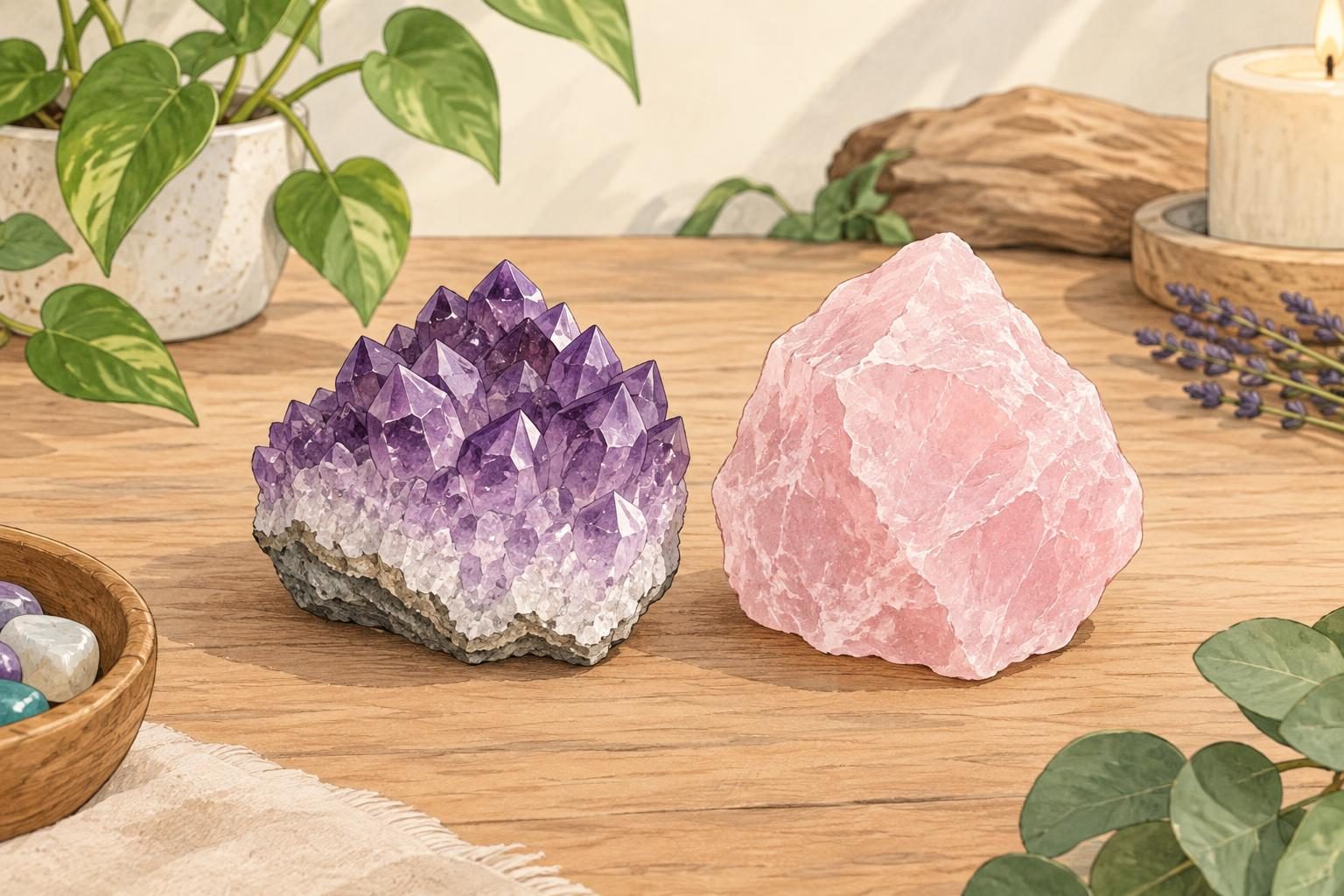
The first is intention. A stone is chosen for a purpose such as calm, focus, energy or protection. In common lore, carnelian is linked with drive, courage and getting moving, while howlite is linked with quieting the mind and with sleep. Wearing both at once asks one bracelet to speed you up and slow you down at the same time. That is why this pair shows up on avoid lists.
The second idea is the chakra system. Many crystal guides map stones and colors to the 7 chakras [1]. In this tradition, these are energy centers running from the base of the spine to the top of the head. Red and orange stones such as carnelian are tied to the lower centers, and purple stones such as amethyst are tied to the crown. Some writers argue that mixing stones meant for very different centers spreads your focus too thin.
Shungite gets its own category. It is a black, carbon-rich rock that is widely described as absorbing or shielding. Advocates who hold that view say it is shungite, best worn alone [1], so that it does not mute whatever else you are wearing.
Turquoise and amethyst [1] is the pairing with the less consistent explanation. Sources give different reasons for listing it, and those reasons are less settled than the energy-versus-calm logic behind carnelian and howlite. It works better as a prompt to look again at what each stone is for than as a fixed rule.
Crystals that sit well together
Avoid lists are only half of the advice. The same tradition gives two positive rules for deciding which stones belong together.
The first is to bring together stones that share a similar energy: protection, calm, grounding, clarity [1]. A calming set is built only from stones linked with calm, and a grounding set only from stones linked with grounding. When every piece points the same way, nothing in the set pulls against it.
The second rule is about color. Stones of the same color, or of neighboring colors, usually share similar meanings and make harmonious tone-on-tone combinations [1]. Orange carnelian beside red or yellow stones follows this pattern, and so does purple amethyst beside lavender and clear stones. It is also an easy way to make a set look deliberate rather than random.
The table sets the flagged combinations and the color rule side by side.
| Combination | Reasoning in crystal lore | Practical takeaway |
|---|---|---|
| carnelian with howlite [1] | A stone for energy worn with a stone for calm | Choose one based on the intention you need |
| Turquoise and amethyst [1] | Listed as a pair to avoid; explanations vary | Check intentions, then how the pair feels |
| Shungite with other stones | shungite, best worn alone [1] | Wear it as a single piece |
| Same or neighboring colors | Similar meanings, tone-on-tone harmony | A simple starting point for a new set |
The takeaway column is about timing and purpose, not about banning a stone. Carnelian and howlite can share a jewelry box. The advice only concerns wearing them at the same time.
How to test a combination yourself
The checks that crystal practitioners recommend are personal rather than measured. They fit into a short routine:
- Check that the intentions are consistent, then listen to how it feels [1].
- If something feels contradictory, take a stone off, see how it feels and adjust [1].
- When adding a new piece, pick it from the same energy group as the rest of the set, so the whole set stays with one aim such as protection, calm, grounding or clarity [1].
Example: someone wants a bracelet for an exam period. They choose carnelian for motivation and howlite because they have been sleeping badly. Checking whether the intentions are consistent shows the problem straight away, since one stone is meant to push forward and the other to wind down. Following the routine, they keep the carnelian bracelet for study hours and move the howlite to a bedside dish. Nothing is discarded, and each intention gets its own slot.
A second example: a necklace mixes turquoise and amethyst. The wearer looks at why each stone was chosen and finds that both were picked for calm, so on that measure the set is consistent. If it still feels off, the next step is to remove one of the two, wear the necklace that way for a while and decide which version suits them.
The routine has a clear limit. It relies on your own impression, so nobody else can verify the result, and it tells you nothing about what the stones are made of. That question belongs to a different area, covered next.
Labels, imitations and what a crystal is
Pairing advice assumes that each stone is what its label says, and that is not always the case. Before you worry about whether two pieces clash, it helps to know how often stones are sold under other names.
Howlite is a white to grey mineral with dark veining. It takes dye readily, and blue-dyed howlite is widely sold as imitation turquoise. If you own a bracelet labeled turquoise and amethyst, part of it may actually be dyed howlite, which changes how the pairing advice applies.
Carnelian is an orange to red form of chalcedony, a quartz whose crystals are too fine to see. Some stones sold as carnelian are agate that has been heated or dyed to deepen its color. Amethyst is purple quartz, and glass copies turn up in low-cost jewelry. Shungite is a black, carbon-rich rock rather than a single crystalline mineral, and other black stones are sometimes sold under its name.
This is also where the gemstone meaning of crystal and the scientific meaning part ways. In mineralogy, a crystal is a solid whose atoms repeat in an ordered pattern. Crystals are commonly recognized, macroscopically, by their shape, consisting of flat faces with sharp angles [2]. That clue applies to raw points and clusters. Tumbled stones and polished beads have had their faces worn or cut away, so shape says little about most bracelet beads. Our guide to crystal scientific names explains the terms, the main types of crystals shows how minerals are grouped, and crystal habit shapes describes the forms a specimen can grow in.
Tip: photograph each stone in daylight against a plain white background, front and back, before you build a set. You then have a clear record if you want a second opinion later.
For pieces with real monetary value, ask a gemologist before you buy, sell or insure them. A seller's label or description on its own is not proof of what a stone is.
Physical care when stones share a pouch or bracelet
Energy aside, there is one real way two stones can be bad together: they can damage each other.
Carnelian and amethyst are both forms of quartz, a tough material, while turquoise, howlite and shungite are softer. When stones rub against each other in a pocket, a pouch or a loosely strung bracelet, the tougher stone wins. The softer one picks up scratches and dull patches.
Warning: turquoise is porous as well as soft. Skin oils, lotion, perfume and cleaning sprays can soak in and change its color. Scratches on a polished turquoise cabochon generally need a professional to re-polish. Damage like this lowers the value of a piece, and no change in how you arrange your stones will undo it.
A few other physical points are worth knowing:
- Amethyst can lose color after long exposure to strong sunlight, so a sunny windowsill is not a neutral place to display it.
- Shungite is soft and can leave black marks on lighter stones and on fabric.
- Separate cloth bags or a divided box keep pieces from knocking against each other in storage.
- A bracelet strung on worn elastic lets beads shift and grind against each other, so restringing a loose piece protects the softer beads in it.
If you own a piece with value and are unsure how to store or clean it, ask a jeweler who works with that material before you try anything yourself. Ultrasonic cleaners and chemical dips are a common way to ruin porous or treated stones.
Common mistakes with combinations
Most problems with crystal sets come from reading the advice too literally or skipping the basics:
- Treating avoid lists as fixed laws. They are guidance from one tradition, and sources do not all agree.
- Getting rid of a stone because it appeared on a list. The advice concerns wearing stones at the same time, not owning them.
- Trying to fix a perceived clash by adding a third stone. More pieces with more intentions make a set harder to judge, not easier.
- Assuming a dyed imitation carries the meaning of the stone it copies. Blue howlite is still howlite.
- Packing many intentions into one bracelet. Calm, energy, protection and clarity all at once is exactly what the consistency check is meant to catch.
- Storing everything loose in one bag, which puts softer stones at risk of scratches.
- Using any combination in place of medical advice.
The common thread is that the energy rules and the physical facts answer different questions. One is about how a set feels to you. The other is about what the stones are and how they wear over time.
What science says about crystal therapy
The phrase crystal therapy [2] describes the belief that stones placed on or near the body can influence mood, energy or health. In science, a crystal is a solid with a regular, repeating internal structure, studied in chemistry, physics and mineralogy. That structure is what gives quartz, calcite and other minerals their flat faces and consistent angles. Our guide to crystal shapes and their scientific names covers that side in more detail.
Mainstream science treats crystal healing as a belief practice rather than a treatment. There is no evidence that one stone weakens another, or that any pairing affects health.
That does not make the feel-based checks pointless. If a stone helps you remember an intention, or a color combination simply pleases you, that is a fair reason to choose it. What the checks cannot do is diagnose or treat anything. For health concerns, speak to a doctor, and use stones alongside proper care rather than instead of it.
Keeping a record of your stones and sets
Once you know how the pairing advice works, a simple record makes it easier to apply. For each stone, note the name it was sold under, where you got it and the intention you chose it for. For each set, list the stones in it and the aim they share, so that checking whether the intentions are consistent takes moments rather than guesswork [1].
The same notes help with the physical side. Marking which pieces are soft or porous, such as turquoise, howlite and shungite, reminds you to store them apart from quartz stones like carnelian and amethyst. Writing down which bracelet a stone belongs to also stops pieces from drifting into the same pouch over time.
Rock Identifier can keep saved photos of your stones together in one collection and offers background on a stone's properties, origin and common uses, which you can add to your notes. For a firm answer on what a valuable piece is, a gemologist remains the person to ask.
Common questions
- Can carnelian and howlite ever be worn together?
- Yes, nothing physical stops you, and the warning comes from crystal-healing belief rather than from any reaction between the stones. Advocates suggest deciding whether you need energy or calm at that moment and wearing the stone that matches. If the combination feels fine to you, there is no rule you are breaking.
- Why is shungite usually kept on its own?
- In crystal lore, shungite is described as absorbing or shielding, so people who follow that view worry it will mute the other stones in a set. There is also a practical reason to keep it apart, since it is a soft material that can rub off as black smudges onto pale stones and clothing.
- Can wearing two clashing crystals cause harm?
- No study has shown that stones affect each other or your health through the way they are paired. The real risk is physical, because a tougher stone such as amethyst can scratch softer turquoise or howlite when the two rub against each other.
- How can I tell whether my turquoise is genuine?
- Blue-dyed howlite is a common turquoise imitation, so a label alone is not enough to go on. If the piece matters to you financially, ask a gemologist for an opinion before you buy, sell or insure it.
- Do crystals of the same color always go together?
- Matching or neighboring colors are a common starting point because those stones tend to share similar meanings in crystal lore. It is a guideline rather than a guarantee. If a tone-on-tone set still feels wrong to you, the usual next step is to remove a stone and see how it feels.
Sources
Keep reading

 AI illustration